Английский
 Упрощённый китайский
 Испанский
 Французский
 Немецкий
 Русский
 Португальский
 Итальянский
 Японский язык
 Корейский язык
 Арабский
 Турецкий язык
 Вьетнамский язык
 Тайский
 Индонезия
 Малайский
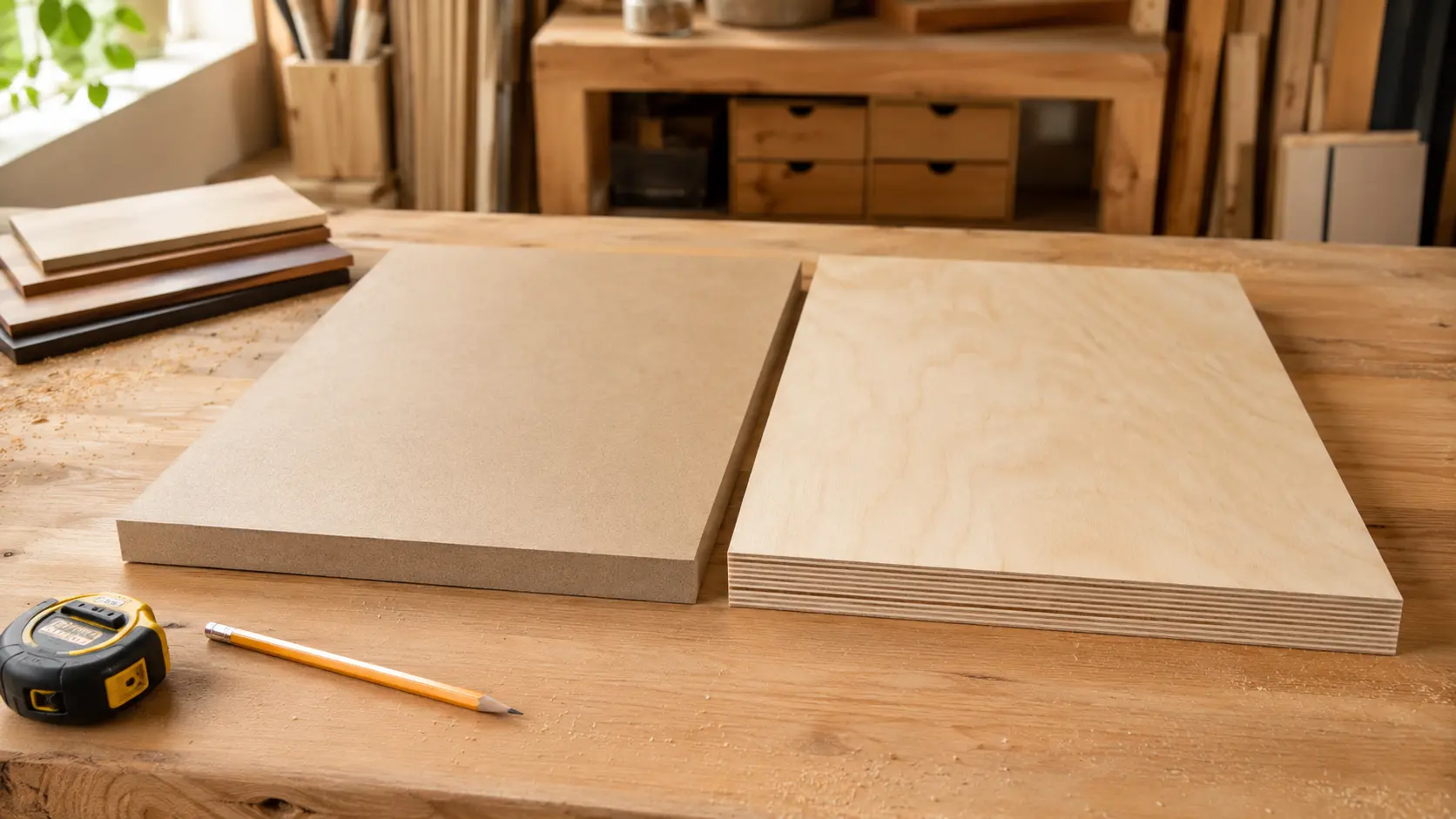
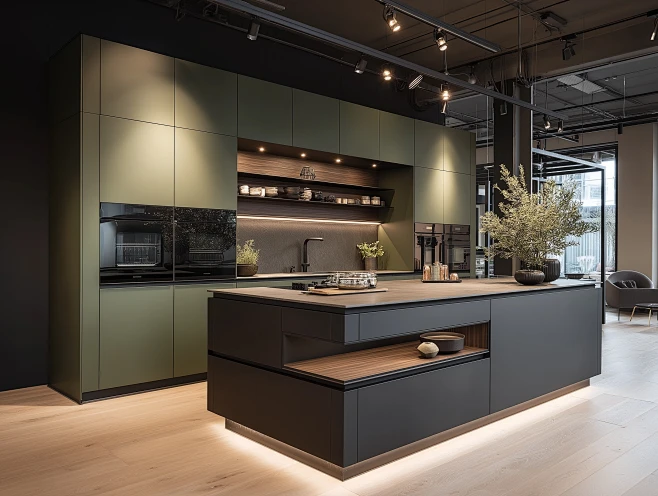
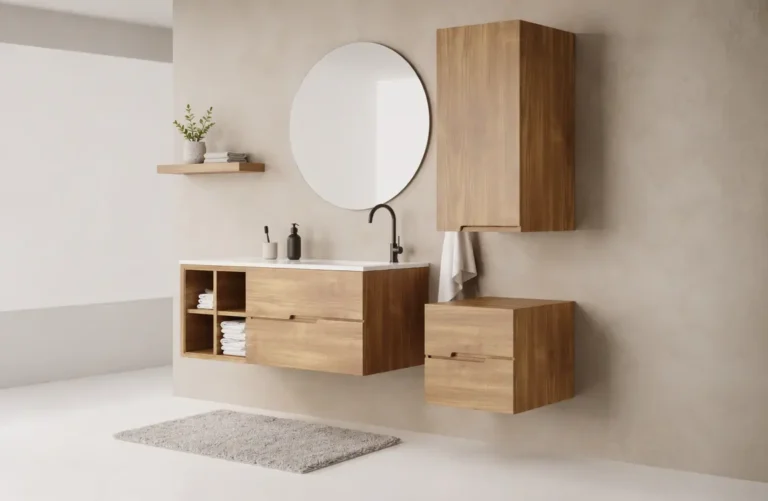
or commercial fit-out projects — from chain hotels and office towers to retail malls — tight deadlines and large volumes leave little room for budget overruns. Yet many procurement teams unknowingly erode 15% to 25% of their joinery budget on secondary processing costs: cut edge chipping, rework on custom shapes, and on-site touch-ups caused by poor material selection. Choosing between плита МДФ и ДСП (particle board) is more than a per-sheet price comparison — it’s a decision that directly impacts labor waste, project timelines, and final profit margins.
This guide breaks down their real-world performance, scenario-based selection strategies, and how engineered wood solutions from Yajuwood can drive down total project costs.
1. The Hidden Cost Drain in Commercial Fit-Outs: Why Secondary Processing Blows Budgets
Commercial joinery relies on consistency and speed. When the wrong panel material is specified, three hidden costs pile up quickly:
- High material waste: Uneven internal structure leads to splintering, delamination, and unusable offcuts during cutting, driving up scrap rates significantly.
- Frequent rework: Curved profiles, decorative carvings, and high-gloss finishes require a smooth, uniform substrate. Poor surface quality adds hours of sanding and filler work, doubling labor time.
- On-site delays: Dimensional inaccuracies, poor edge bonding, and weak screw retention force last-minute adjustments on site, pushing back overall project delivery.
Across the industry, poor material selection adds roughly 20% to total joinery costs, making it one of the top causes of budget overruns in commercial fit-outs.
2. Head-to-Head Performance Comparison: MDF Board vs. Chipboard
Below is a side-by-side breakdown of the two materials across 8 critical metrics for commercial construction sourcing:
| Performance Metric | MDF Board (Medium Density Fiberboard) | Chipboard (Particle Board) |
|---|---|---|
| Surface Smoothness | Extremely smooth and uniform fiber structure; ideal for high-gloss lacquer, vacuum forming, and intricate carving | Good surface finish with subtle grain texture; optimized for melamine and PVC lamination, not recommended for fine detailing |
| Влагостойкость | Standard grades swell easily with water exposure; moisture-resistant MDF grades available for damp environments | Performance depends on core density; high-density premium chipboard offers better moisture resistance than standard MDF |
| Screw Holding & Stability | Moderate vertical screw hold; weak edge retention, prone to loosening with repeated assembly | Interlocked wood chip structure delivers strong screw holding, excellent dimensional stability, and high sag resistance for long spans |
| Fabrication Versatility | Highly adaptable for curved cuts, routing, and custom decorative shaping | Optimized for straight cutting, edge banding, and drilling; maximum efficiency for standardized cabinetry |
| Secondary Processing Cost | Superior shaping performance, but higher tool wear and dust production; custom fabrication is more expensive | Fast, efficient straight cutting and edge processing; 15–20% lower production cost for volume cabinet runs |
| Panel Weight | Higher density (680–800kg/m³); heavier per sheet, adding to building dead load and installation labor | Moderate density (550–700kg/m³); lighter weight reduces structural load and handling costs |
| Environmental Standards | Available in E0/E1 grades with controlled formaldehyde emissions | Available in E0/E1 grades; premium grades meet or exceed international emission standards |
| Typical Applications | Feature doors, retail display counters, curved wall panels, carved components | Cabinet carcases, furniture substrates, partition bases, high-volume standardized joinery |
3. Scenario-Based Selection Guide: Pick the Right Panel for the Job
There is no universally “better” panel — only the right material for the application. Here’s how to choose for the two most common commercial fit-out scenarios:
Scenario A: Retail Displays, Feature Doors, Curved Architectural Details — Choose High-Density MDF Board
These high-visibility areas demand flawless surface finish and precise shaping. High-density MDF’s uniform fiber structure leaves clean, smooth cut edges that require minimal filler before painting or laminating. It excels at curved profiles, decorative routing, and high-gloss finishes — reducing rework time by up to 30% compared to chipboard for custom elements.
While MDF carries a higher per-sheet cost, it delivers better value for feature work where aesthetics and precision are non-negotiable. For damp locations, specify moisture-resistant MDF with fully sealed edges to prevent swelling.
Scenario B: Office Towers, Hotel Guest Room Cabinet Carcases — Choose E0/E1 Grade Premium Chipboard
For large volumes of standardized cabinetry — the biggest share of joinery in commercial fit-outs — premium chipboard delivers the best balance of performance and cost. It offers three key advantages for large-scale projects:
- Faster production: Straight cutting, edge banding, and drilling run faster with less tool wear, cutting lead times for bulk orders.
- Lower total cost: Lower material pricing combined with reduced fabrication labor brings total cabinet carcase costs down by ~20% compared to MDF.
- Better long-term performance: Strong screw retention and high sag resistance mean cabinets stay stable even with long shelf spans. Lighter panels also reduce dead load on building floors and walls.
For chain hotels, office fit-outs, and residential bulk projects, E1 grade particle board is the most cost-effective, reliable choice.
4. Reduce Costs by 20%: Yajuwood’s One-Stop Engineered Wood Supply for Commercial Projects
True cost savings in commercial joinery don’t come from squeezing per-sheet prices — they come from eliminating unnecessary secondary processing at the source. As an experienced E1 grade particle board and MDF board supplier, Yajuwood provides one-stop custom engineered wood panel solutions for residential and commercial projects worldwide. We help clients cut secondary processing costs in three key ways:
- Precision pre-fabrication to your specs: We provide custom size cutting, pre-drilling, automated edge banding, and pre-lamination services matched directly to your project drawings. Panels arrive on site ready for assembly, eliminating 80% of on-site cutting and sanding, and keeping scrap rates under 2%.
- Single-source supply for all panel types: We stock MDF board, chipboard, film faced plywood, birch plywood, melamine plywood, and more — all with consistent quality control. No need to coordinate multiple suppliers, reducing management costs and delivery inconsistencies.
- Project-grade quality and global delivery: All panels meet ISO 9001, ISO 14001, CARB P2, and E0/E1 international standards, with FSC certification available. Our scalable production and global logistics ensure on-time delivery for large-volume orders, with proven experience on projects including Sydney suburban townhouses and Dubai high-rise commercial towers.
5. Frequently Asked Questions (FAQ)
Q1: Which is more durable for commercial fit-outs in humid climates: MDF or chipboard?
For standard grades, high-density premium chipboard offers better moisture resistance than standard MDF. For high-humidity areas, we recommend moisture-resistant MDF for decorative elements and high-grade moisture-resistant chipboard for cabinet carcases. All panels should have fully sealed edges for maximum durability in damp environments.
Q2: Why is chipboard considered a cost-saving material for large construction projects?
Chipboard drives down total costs in three ways: lower raw material pricing per sheet, faster fabrication for standardized cabinetry with less tool wear (15–20% lower processing costs), and lighter weight that reduces shipping and installation labor. The larger the project volume, the greater the total cost savings.
Q3: Why isn’t MDF recommended for large cabinet carcases?
MDF’s higher density adds significant weight, increasing structural load on buildings and making installation more labor-intensive. It also has weaker edge screw retention, which can lead to loosening over time, and is more prone to sagging on long shelf spans. For large cabinet bodies, chipboard delivers better long-term stability at a lower cost.
Q4: What custom processing services does Yajuwood offer for commercial projects?
Yajuwood offers full pre-fabrication services including custom size cutting, shaped cutting, pre-drilling, edge banding, melamine lamination, and wood veneer lamination. All work is completed to exact project specifications at our factory, minimizing on-site secondary work and reducing total project costs.