yajuwood.com
ما هو خشب MDF؟ مقارنة بين خشب MDF والخشب الرقائقي في مشاريع الأثاث والتصميم الداخلي
عندما يقارن المشترون الألواح الخشبية المستخدمة في صناعة الأثاث أو الخزائن أو ألواح الجدران أو مشاريع الديكور الداخلي، غالبًا ما يتم عرض مادتين جنبًا إلى جنب: خشب MDF و الخشب الرقائقي.
يُستخدم كلاهما على نطاق واسع في صناعة الأثاث الحديث ومشاريع التصميم الداخلي التجارية، لكنهما ليسا متماثلين. يتميز لوح MDF بسطح أملس وأداء معالجة مستقر، في حين يُقدَّر الخشب الرقائقي بفضل بنيته الطبقية وقوته وقدرته على تثبيت البراغي.
بالنسبة لمصنعي الأثاث والمقاولين وتجار الجملة ومشتري المشاريع، فإن الاختيار بين ألواح MDF والخشب الرقائقي لا يقتصر على السعر فحسب، بل يؤثر أيضًا على متانة المنتج، وتشطيب السطح، وجودة المعالجة الآلية، ومقاومة الرطوبة، وأداء المشروع على المدى الطويل.
يشرح هذا الدليل ماهية خشب MDF، وكيف يختلف عن الخشب الرقائقي، وكيفية اختيار اللوح الخشبي المناسب للاستخدام الذي تريده.
ما هو خشب MDF؟
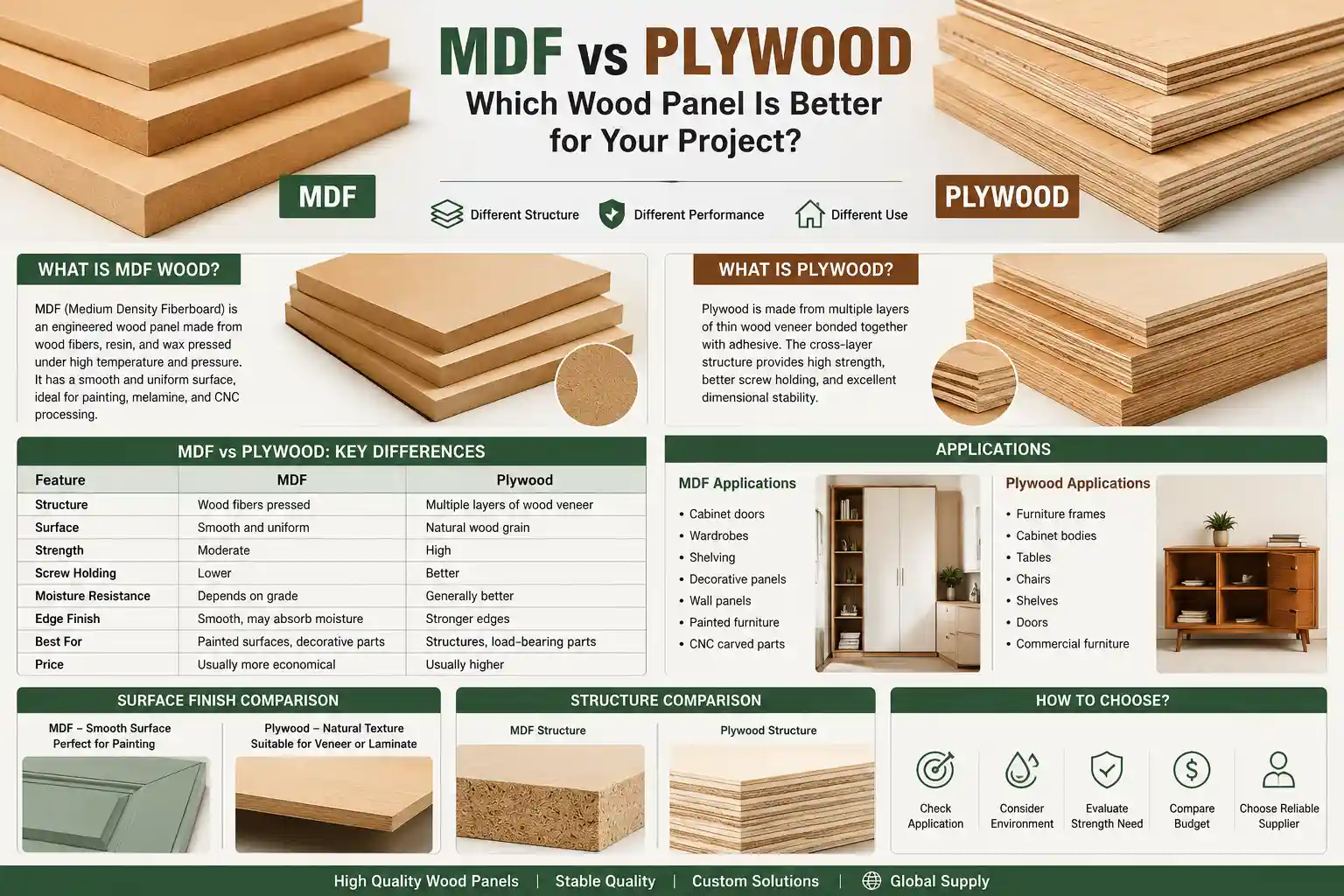
MDF, ، اختصار لـ ألواح الألياف ذات الكثافة المتوسطة, ، هي لوح خشبي مُصنَّع مصنوع من ألياف الخشب والراتنج والشمع. ويتم ضغط هذه المواد تحت درجة حرارة وضغط عاليين لتشكيل لوح كثيف ومتجانس.
على عكس الخشب الصلب أو الخشب الرقائقي، لا يحتوي الخشب المضغوط (MDF) على عروق خشبية طبيعية مرئية أو قشور خشبية متعددة الطبقات. ويتميز بتركيبة داخلية أكثر اتساقًا، مما يسهل عملية قصه وحفره وطلائه وتغليفه وتشكيله.
نظرًا لسطحه الأملس وكثافته المتجانسة، يُستخدم الخشب المضغوط (MDF) عادةً في:
- أبواب الخزانة
- خزائن الملابس
- أرفف
- ألواح الجدران الداخلية
- قطع الأثاث الزخرفية
- الأثاث المطلي
- ألواح مُشكَّلة باستخدام آلة التوجيه بالتحكم الرقمي (CNC)
- الألواح المكسوة بالميلامين
بالنسبة للمشاريع التي تتطلب تشطيبًا ناعمًا للأسطح، غالبًا ما يُعد خشب MDF خيارًا عمليًّا وفعالاً من حيث التكلفة.
ما هو الخشب الرقائقي؟
الخشب الرقائقي هي لوح خشبي مُصنَّع يتم إنتاجه عن طريق ربط عدة طبقات من القشرة الخشبية الرقيقة معًا. وعادةً ما تُرتَّب هذه الطبقات بحيث تتناوب اتجاهات الألياف الخشبية، مما يساعد على تحسين متانة اللوح وثبات أبعاده.
يمنح هذا البناء متعدد الطبقات الخشب الرقائقي مقاومة أفضل للانحناء والتشقق مقارنةً بالعديد من الألواح أحادية الطبقة أو المصنوعة من الألياف. كما يوفر قوة تثبيت أفضل للبراغي، مما يجعله مناسبًا للأثاث الهيكلي والتطبيقات التي تتطلب أداءً أقوى في تحمل الأحمال.
يُستخدم الخشب الرقائقي عادةً في:
- هياكل الأثاث
- الخزائن
- الجداول
- الرفوف
- الأبواب
- ألواح الجدران
- التغليف
- مشاريع البناء والتصميم الداخلي
- إنتاج الأثاث التجاري
بالمقارنة مع ألواح MDF، عادةً ما يكون أداء الخشب الرقائقي أفضل في الحالات التي تكون فيها القوة والثبات والمتانة عوامل أكثر أهمية.
MDF مقابل الخشب الرقائقي: الاختلافات الرئيسية
| العنصر | خشب MDF | الخشب الرقائقي |
|---|---|---|
| الهيكل | ألياف خشبية مضغوطة بالراتنج | طبقات متعددة من قشرة الخشب |
| السطح | ناعم جدًّا ومتجانس | نسيج الخشب الطبيعي أو ملمس القشرة الخشبية |
| القوة | مناسب للاستخدام العام في صناعة الأثاث | أقوى وأفضل لتحمل الأحمال |
| تثبيت البراغي | أقل من الخشب الرقائقي | قدرة أفضل على تثبيت البراغي |
| تشطيب الحواف | ناعم ولكنه قد يمتص الرطوبة | حواف أكثر صلابة حسب الدرجة |
| الرسم | مثالي للطلاء | جيد، لكن الحبوب قد تحتاج إلى معالجة |
| التصفيح | مناسب للميلامين، والقشرة الخشبية، والبلاستيك (PVC)، وHPL | مناسب للقشرة الخشبية واللامينيت والأسطح الزخرفية |
| مقاومة الرطوبة | يعتمد على الصف الدراسي | بشكل عام، تكون النتيجة أفضل عند استخدام الغراء المناسب والدرجة المناسبة |
| التكلفة | عادةً ما تكون أكثر اقتصادية | عادةً ما يكون أعلى من MDF |
| أفضل استخدام | الأثاث المطلي، وأبواب الخزائن، والألواح الزخرفية | الخزائن، هياكل الأثاث، الرفوف، الطاولات، الأجزاء الهيكلية |
أيهما أقوى: MDF أم الخشب الرقائقي؟
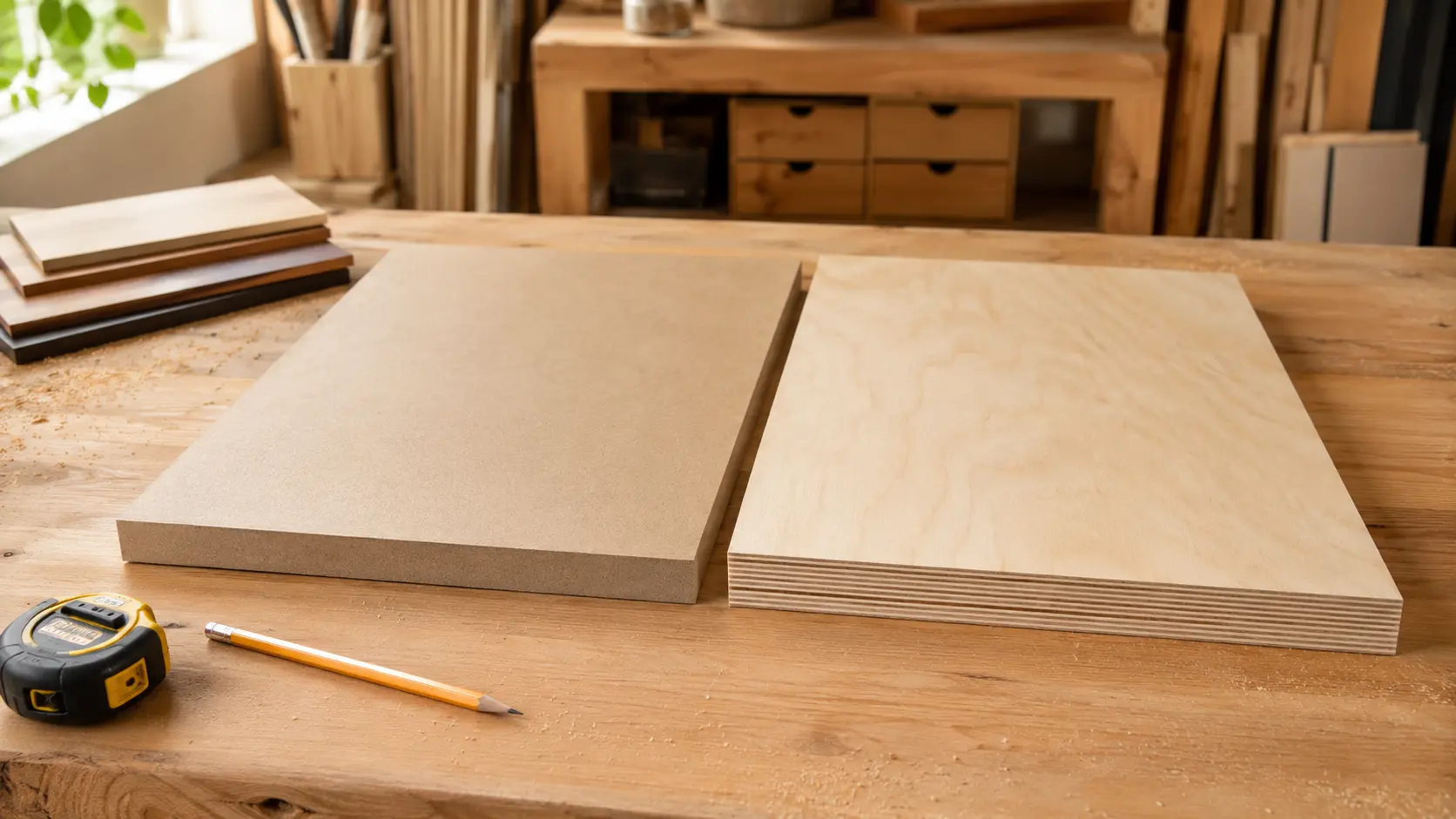
في معظم التطبيقات،, الخشب الرقائقي أقوى من الخشب المضغوط (MDF).
ويعود السبب في ذلك إلى بنيته المكونة من طبقات من القشرة الخشبية. تضفي كل طبقة مزيدًا من المتانة، كما أن التناوب في اتجاه الألياف الخشبية يساعد الخشب الرقائقي على مقاومة الانحناء والتشقق. وهذا يجعل الخشب الرقائقي خيارًا أفضل لأجزاء الأثاث التي يتعين عليها تحمل الأوزان، أو تثبيت البراغي، أو الحفاظ على ثباتها أثناء الاستخدام على المدى الطويل.
على سبيل المثال، غالبًا ما يُفضل استخدام الخشب الرقائقي في:
- هياكل الخزائن
- هياكل الجداول
- أنظمة الرفوف
- هياكل الأثاث التجاري
- أثاث الفنادق والمطاعم
- الألواح الداخلية الهيكلية
ومع ذلك، فإن لوح MDF لا يعتبر ضعيفًا عند استخدامه بشكل صحيح. فهو مناسب تمامًا للمكونات الزخرفية وغير الهيكلية، لا سيما عندما تكون اللمسة النهائية المسطحة والناعمة أكثر أهمية من القدرة العالية على تحمل الأحمال.
أيهما يتمتع بلمسة نهائية أفضل؟
بالنسبة لأعمال الطلاء والتشطيبات الزخرفية،, يتمتع MDF بميزة واضحة.
يتميز خشب MDF بسطح أملس ومتجانس خالٍ من العقد أو العروق الطبيعية. وهذا يجعله مناسبًا للاستخدام في:
- أبواب الخزانة المطلية
- أثاث بلمسة نهائية غير لامعة
- ألواح زخرفية منحوتة بتقنية CNC
- الألواح المكسوة بالميلامين
- الألواح المطلية بالبولي فينيل كلوريد
- أثاث عصري بسيط التصميم
كما يمكن إضفاء لمسة نهائية جميلة على الخشب الرقائقي، خاصةً عند تغطيته بقشرة خشبية طبيعية أو الميلامين أو HPL أو ورق زخرفي. ومع ذلك، قد يتطلب الخشب الرقائقي الخام مزيدًا من الصنفرة والمعالجة السطحية قبل الطلاء بسبب نسيج قشرته الخشبية.
لذا فإن الاختيار يعتمد على الشكل النهائي:
- للأثاث المطلي ذي الأسطح الملساء والعصري: غالبًا ما يكون MDF أفضل
- للحصول على ملمس الخشب الطبيعي أو هيكل ألواح أكثر متانة: غالبًا ما يكون الخشب الرقائقي أفضل
أيهما أفضل لتصنيع الأثاث؟
لا توجد إجابة واحدة. فالخيار الأفضل من حيث المواد يعتمد على نوع الأثاث، والميزانية المستهدفة، ومعالجة السطح، وبيئة الاستخدام.
يُعد MDF مناسبًا لما يلي:
- أبواب الخزانة
- أبواب الخزانة
- الألواح الزخرفية
- الأثاث المطلي
- ألواح الجدران
- رفوف مخصصة للأحمال المتوسطة
- أجزاء الأثاث التي تتطلب تشكيلًا باستخدام الحاسب الآلي (CNC)
الخشب الرقائقي مناسب للاستخدام في:
- هياكل الأثاث
- هيئات مجلس الوزراء
- طاولات الطعام
- الأثاث التجاري
- أثاث الفنادق
- أثاث المطاعم
- الرفوف التي تتطلب دعماً أقوى
- التطبيقات التي تتطلب قوة تثبيت لولبية أفضل
في العديد من مصانع الأثاث، لا يُعتبر كل من لوحات MDF والخشب الرقائقي منافسين لبعضهما البعض. بل غالبًا ما يتم استخدامهما معًا. على سبيل المثال، قد يُستخدم الخشب الرقائقي في الهيكل، بينما تُستخدم لوحات MDF في الأبواب أو الأسطح الزخرفية.
أيهما أفضل لخزائن المطبخ؟
بالنسبة لخزائن المطبخ، تُعد مقاومة الرطوبة وقوة تثبيت البراغي من العوامل المهمة.
غالبًا ما يُفضل استخدام الخشب الرقائقي في صناعة هياكل الخزائن نظرًا لمتانته الأفضل وأدائه الأفضل عادةً في البيئات الصعبة. فهو يتحمل المفصلات والمسامير والاستخدام المتكرر بشكل أكثر فعالية.
يُستخدم خشب MDF عادةً في صناعة أبواب الخزائن، ولا سيما الأبواب المطلية، لأنه يوفر سطحًا أملسًا ومظهرًا ثابتًا.
ومن الأمثلة العملية على ذلك:
- خشب رقائقي لهيكل الخزانة
- ألواح MDF لأبواب الخزائن
- تشطيبات من الميلامين أو HPL أو PVC أو القشرة الخشبية لحماية السطح
يساعد هذا المزيج على تحقيق التوازن بين المتانة والمظهر والتكلفة.
أيهما أفضل للمشاريع التجارية؟
بالنسبة للمشاريع التجارية مثل الفنادق والمطاعم والمكاتب والشقق والمساحات المخصصة للتجزئة، يعتمد الاختيار على كثافة الاستخدام.
بالنسبة للمناطق التي تشهد استخدامًا متكررًا، أو التي تحتوي على أثاث أثقل، أو التي تتطلب متطلبات هيكلية أكثر صرامة، غالبًا ما يُعد الخشب الرقائقي خيارًا أكثر أمانًا. ويشمل ذلك:
- طاولات المطاعم
- أثاث غرف الفنادق
- الأثاث الثابت
- قواعد الألواح الجدارية
- هياكل مقاعد الأكشاك
- الخزائن التجارية
بالنسبة للمساحات المخصصة للديكور، يمكن أن يكون خشب MDF أكثر كفاءة وفعالية من حيث التكلفة. وهو مناسب لما يلي:
- ألواح الجدران الزخرفية
- أسطح مكاتب الاستقبال
- الألواح المطلية
- وحدات العرض الداخلية
- قطع زخرفية ذات أشكال مخصصة
يجب ألا يقتصر مشترو المشاريع على اختيار الألواح بناءً على اسم المادة فحسب، بل ينبغي عليهم أيضًا التأكد من السماكة والكثافة ونوع الغراء وتشطيب السطح ومقاومة الرطوبة ومعايير الإنتاج.
استخدامات ألواح MDF
يُستخدم لوح MDF على نطاق واسع في صناعة الأثاث والديكور الداخلي بفضل سطحه الأملس وأدائه الجيد في المعالجة.
ومن بين التطبيقات الشائعة ما يلي:
- خزائن الملابس
- الخزائن
- الرفوف
- ألواح الجدران الداخلية
- الألواح الزخرفية
- أثاث المكاتب
- تجهيزات المتاجر
- الأثاث المطلي
- ألواح الأثاث المصنوعة من الميلامين
يُعد خشب MDF مفيدًا بشكل خاص عندما يتطلب المشروع خطوطًا واضحة، وجودة سطح متسقة، وتشطيبات زخرفية عصرية.
استخدامات الخشب الرقائقي
يُستخدم الخشب الرقائقي في كل من صناعة الأثاث والمشاريع الإنشائية بفضل متانته وبنيته الطبقية.
ومن بين التطبيقات الشائعة ما يلي:
- هيئات مجلس الوزراء
- هياكل الأثاث
- الجداول
- الكراسي
- الرفوف
- الأبواب
- ألواح الجدران
- التغليف
- الأثاث التجاري
- أثاث الفنادق والمطاعم
بالنسبة للمشترين في قطاع الأعمال (B2B)، غالبًا ما يتم اختيار الخشب الرقائقي عندما تكون المتانة وقوة تثبيت البراغي والاستقرار على المدى الطويل من العوامل المهمة.
كيفية الاختيار بين ألواح MDF والخشب الرقائقي
قبل اختيار ألواح MDF أو الخشب الرقائقي، ينبغي على المشترين مراعاة النقاط التالية:
1. التطبيق
هل تُستخدم اللوحة في الإنشاءات، أم للزخرفة، أم لأبواب الخزائن، أم للأرفف، أم كألواح جدارية؟
إذا كنت بحاجة إلى متانة، فاختر الخشب الرقائقي.
إذا كان الأمر يتطلب سطحًا أملسًا مطليًّا، فقد يكون خشب MDF هو الخيار الأفضل.
2. تشطيب السطح
هل سيتم طلاء اللوح أم تغليفه أم تغطيته بقشرة خشبية أم تغطيته بالميلامين؟
يُعد خشب MDF مادة ممتازة للطلاء.
الخشب الرقائقي مناسب لصناعة القشرة الخشبية، والرقائق الخشبية، والألواح الزخرفية الهيكلية.
3. البيئة الرطبة
هل سيتم استخدام المنتج في المطابخ أم الحمامات أم المناطق الرطبة أم الأماكن الداخلية الجافة؟
في البيئات الرطبة، تأكد من درجة مقاومة الرطوبة بدلاً من الاعتماد فقط على اسم المادة.
4. متطلبات تثبيت البراغي
إذا كان الأثاث يتطلب مفصلات متينة، أو تجميعًا متكررًا، أو قطع تثبيت مخصصة للأحمال الثقيلة، فإن الخشب الرقائقي عادةً ما يكون أكثر موثوقية.
5. الميزانية
غالبًا ما يكون لوح MDF أكثر اقتصادية، في حين أن الخشب الرقائقي عادةً ما يكون أكثر تكلفة بسبب تركيبته المكونة من قشرة خشبية وأدائه الميكانيكي الأفضل.
6. قدرات المورد
يجب أن يوفر المورد الموثوق للألواح الخشبية سماكة متسقة، وجودة ثابتة، وتغليفًا مناسبًا، وخيارات سطحية ملائمة لسوقكم.
اللوح المضغوط (MDF) مقابل الخشب الرقائقي: أيهما يجب أن تختار؟
اختر MDF إذا كان مشروعك يتطلب:
- طلاء أملس
- الألواح الزخرفية
- النحت باستخدام الحاسب الآلي (CNC)
- قطع أثاث ذات كفاءة من حيث التكلفة
- معالجة الأسطح بالميلامين أو البولي فينيل كلوريد (PVC)
- الأثاث المنزلي الذي يتطلب متانة معتدلة
اختر الخشب الرقائقي إذا كان مشروعك يتطلب:
- قوة أعلى
- تحسين ثبات البراغي
- هياكل الأثاث
- هياكل مجلس الوزراء
- الأثاث التجاري
- أثاث الفنادق والمطاعم
- متانة أفضل على المدى الطويل
في العديد من مشاريع الأثاث والتصميم الداخلي، لا يكمن الحل الأمثل في اختيار مادة واحدة فقط، بل في الجمع بين ألواح MDF والخشب الرقائقي وفقًا للغرض المطلوب.
التعامل مع مورد موثوق للألواح الخشبية
بالنسبة لمصنعي الأثاث وتجار الجملة والمقاولين ومشتري المشاريع، لا يمثل اختيار المواد سوى جزء واحد من قرار الشراء. فاستقرار الإمداد والجودة الثابتة لا يقلان أهمية عن ذلك.
يجب أن يكون المورد المتخصص في الألواح الخشبية قادرًا على توفير ما يلي:
- لوح MDF
- الخشب الرقائقي
- لوح الميلامين
- ألواح الخشب المضغوط
- الألواح الزخرفية
- حواف مغلفة بالبلاستيك (PVC)
- خيارات القشرة الخشبية ومعالجة الأسطح
- متطلبات تصنيع المعدات الأصلية (OEM) وتصنيع التصميم الأصلي (ODM)
- تغليف الصادرات
- متطلبات السماكة والحجم حسب الطلب
قبل تقديم الطلب، يجب على المشترين التأكد من مواصفات الألواح، وتشطيب السطح، وبيئة الاستخدام، وطريقة التعبئة، ومتطلبات الجودة.
تقدم YaJu حلول الألواح الخشبية للأثاث والديكور والبناء والمشاريع التجارية. إذا كنت تبحث عن ألواح MDF أو الخشب الرقائقي أو منتجات الألواح الخشبية المخصصة، فيمكن لفريقنا مساعدتك في اختيار المادة المناسبة وفقًا للاستخدام الذي تريده.
الأسئلة الشائعة
ما هو خشب MDF؟
خشب MDF، أو الألواح الليفية متوسطة الكثافة، هو لوح خشبي هندسي مصنوع من ألياف الخشب والراتنج والشمع. ويتميز بسطح أملس وموحد، مما يجعله مناسبًا لصناعة الأثاث والخزائن والألواح الزخرفية والتشطيبات المطلية.
هل خشب MDF خشب حقيقي؟
لا يُعد MDF خشبًا صلبًا. إنه منتج خشبي مُصنَّع مصنوع من ألياف الخشب. وعلى الرغم من أنه ليس خشبًا صلبًا طبيعيًّا، إلا أنه يُستخدم على نطاق واسع في صناعة الأثاث الحديث.
هل لوح MDF أقوى من الخشب الرقائقي؟
في معظم الحالات، يكون الخشب الرقائقي أقوى من لوحات MDF لأنه مصنوع من طبقات متعددة من قشرة الخشب. وعادةً ما يتمتع الخشب الرقائقي بقوة أفضل في تثبيت البراغي وأداء أفضل في تحمل الأحمال.
هل يعتبر خشب MDF مادة جيدة لصناعة الأثاث؟
نعم. يُعد لوح MDF خيارًا جيدًا للعديد من تطبيقات الأثاث، لا سيما أبواب الخزائن، وخزائن الملابس، والأرفف، والأثاث المطلي، والألواح الزخرفية. ومع ذلك، فقد لا يكون الخيار الأمثل للأجزاء الهيكلية الثقيلة.
هل الخشب الرقائقي أفضل من الخشب المضغوط (MDF)؟
يُعد الخشب الرقائقي خيارًا أفضل من حيث المتانة، وقدرة تثبيت البراغي، وأجزاء الأثاث الهيكلية. أما الخشب المضغوط (MDF) فهو خيار أفضل للأسطح المطلية الناعمة، والألواح الزخرفية، ومكونات الأثاث الداخلي ذات التكلفة المعقولة.
أيهما أفضل لصناعة الخزائن، MDF أم الخشب الرقائقي؟
بالنسبة لهياكل الخزائن، غالبًا ما يُفضل استخدام الخشب الرقائقي نظرًا لقوته وقدرته على تثبيت البراغي. أما بالنسبة لأبواب الخزائن المطلية، فيُستخدم عادةً الخشب المضغوط (MDF) نظرًا لسطحه الأملس.
هل يمكن استخدام ألواح MDF في الأماكن الرطبة؟
لا يُعد خشب MDF القياسي خيارًا مثاليًّا للمناطق الرطبة أو ذات الرطوبة العالية. وإذا كان المشروع يتطلب مقاومة أفضل للرطوبة، فيجب على المشترين اختيار خشب MDF المقاوم للرطوبة أو النظر في استخدام أنواع مناسبة من الخشب الرقائقي.
ما هي استخدامات ألواح MDF؟
يُستخدم لوح MDF في صناعة الخزائن، وخزائن الملابس، والأرفف، وألواح الجدران، والألواح الزخرفية، والأثاث المكتبي، وتجهيزات المتاجر، ومكونات الأثاث المطلية.
ما هي استخدامات الخشب الرقائقي؟
يُستخدم الخشب الرقائقي في صناعة هياكل الأثاث، وهياكل الخزائن، والطاولات، والرفوف، والأبواب، وألواح الجدران، والتغليف، والأثاث التجاري، ومشاريع البناء الداخلي.
كيف أختار المورد المناسب للألواح الخشبية؟
اختر موردًا قادرًا على توفير جودة ثابتة، ومواصفات مناسبة، وخيارات معالجة الأسطح، وتغليف مخصص للتصدير، ودعم احترافي وفقًا لمتطلبات أثاثك أو مشروعك.