ภาษาอังกฤษ
 ภาษาจีนตัวอักษรแบบย่อ
 ภาษาสเปน
 ภาษาฝรั่งเศส
 ภาษาเยอรมัน
 ภาษารัสเซีย
 ภาษาโปรตุเกส
 ภาษาอิตาลี
 ภาษาญี่ปุ่น
 ภาษาเกาหลี
 ภาษาอาหรับ
 ภาษาตุรกี
 ภาษาเวียดนาม
 ไทย
 อินโดนีเซีย
 มาเลย์

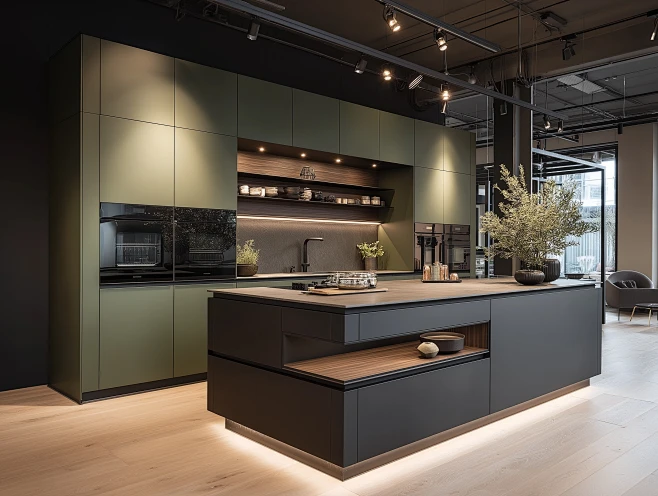
For apartment developers and general contractors, few things are more frustrating than conducting a final handover for hundreds of units, only for clients to discover that the custom kitchen cabinets exhibit subtle yet glaring color discrepancies. Even with the exact same color code specified, adjacent door panels and side panels clash under the lights, turning a modern, high-end interior into a patchwork eyesore.
In large-scale production using melamine-faced panels (MFC/MDF) for multifamily project cabinetry, color variation is rarely a mystery—it is the direct result of an uncontrolled supply chain and unstable manufacturing processes. For residential projects involving 300 sets or more, how can you systematically control every variable from raw material sourcing to on-site installation to ensure true “zero color difference”? Here is your practical engineering guide.
1. Why Do Wholesale Custom Cabinets Always Fail on Color Matching?
Before diving into solutions, you must identify the root causes of color drift. Many project managers assume that specifying a precise color code is enough, entirely overlooking inherent variables in wood-based panel manufacturing:
- Raw Paper and Impregnation Batch Variance: Natural variations in wood pulp fibers and slight fluctuations in melamine resin impregnation formulas result in subtle base-color differences across different paper batches, which become glaringly obvious under light refraction.
- Thermal Pressing Inconsistencies: Uneven temperature distribution, micro-fluctuations in pressure, or worn-out press plates directly alter the microscopic light reflectance of the panel surface. Even identical paper can look different if pressed under varying conditions.
- Environmental Optical Interference: Different room orientations, window placements, and varying LED color temperatures (e.g., 3000K warm light vs. 4000K neutral light) can make identical cabinet finishes appear completely mismatched on-site.
2. The 3-Step Blueprint for “Zero Color Difference” in Large-Scale Apartment Cabinetry
To achieve visual harmony across bulk custom cabinetry, post-production touch-ups are a band-aid solution at best. True quality control must be embedded across three core stages of the industrial supply chain.
Step 1: Source Locking & Master Roll Reservation
- Lock Down Homogeneous Raw Materials: For a 300-set apartment project, never purchase raw materials in staggered batches. Issue a “Full-Volume Lock” instruction to suppliers, buying out the entire production run of paper from the same paper mill, using the same wood pulp batch and the same melamine-impregnated paper batch. Always reserve an extra 5% to 10% for buffer stock to eliminate the need for mid-project reorders.
- Sign-Off on Master Sample Boards: At the project kickoff, developers, factory teams, and QA inspectors must jointly sign off on a Master Color Sample. Every roll of paper must be inspected and matched inside a standard light box (using D65 light sources) before entering production, with non-compliant batches immediately rejected.
Step 2: Digital Process Control & Precision Pressing
- Standardize Manufacturing Parameters: Ensure all impregnated paper sheets are pressed under identical resin curing rates, pressing temperatures, and steel plate textures. Even minor deviations in temperature or pressure alter surface gloss, making numerical control (CNC) press curves non-negotiable.
- Spectrophotometer Quality Audits: Integrate spectrophotometers on the production line to conduct quantitative color difference checks ($\Delta E$ values) on every batch of finished panels. Only panels that fall well below strict tolerance thresholds are cleared for subsequent apartment kitchen cabinet fabrication.
Step 3: Batch Segregation & Pre-Assembly Verification
- One Project, One Batch Management: Implement strict labeling and management across warehouse storage and logistics. All packaged custom cabinet doors and carcasses must be coded with strict room and zone serial numbers. Mixing different production batches on the same floor or unit is strictly prohibited.
- Full Factory Pre-Assembly Simulation: Prior to final packaging, conduct a full-scale pre-assembly mock-up in the factory for representative apartment layouts. This visual alignment catches and eliminates any subtle batch variations in advance, ensuring that your custom cabinetry maintains seamless visual continuity under natural and artificial lighting.
3. Frequently Asked Questions (FAQ) for Project Managers
- Q1: Why do melamine boards with the exact same color code sometimes look different in different rooms?
- A: This is usually driven by two factors: first, the panels may originate from different resin impregnation batches, resulting in micro-variations in resin content or gloss; second, ambient lighting on-site varies (e.g., different window angles or LED fixtures with varying color temperatures). This is why strict batch control at the factory level and unified standard light testing are mandatory.
- Q2: If a 300-set apartment project schedule is extended, how can color drift be prevented during phased deliveries?
- A: The core strategy is “front-loaded bulk procurement.” The entire volume of impregnated paper required for the entire project must be secured, pressed, and warehoused at the very beginning. Never attempt to reorder the same color code mid-production, as this is the primary cause of severe color discrepancies in major projects.
If you are currently planning a large-scale apartment, residential, or commercial fit-out project and looking for a reliable cabinetry manufacturer capable of absolute color control and on-time delivery, get in touch with our team today. We deliver comprehensive engineering cabinetry solutions designed to protect your project quality from day one.